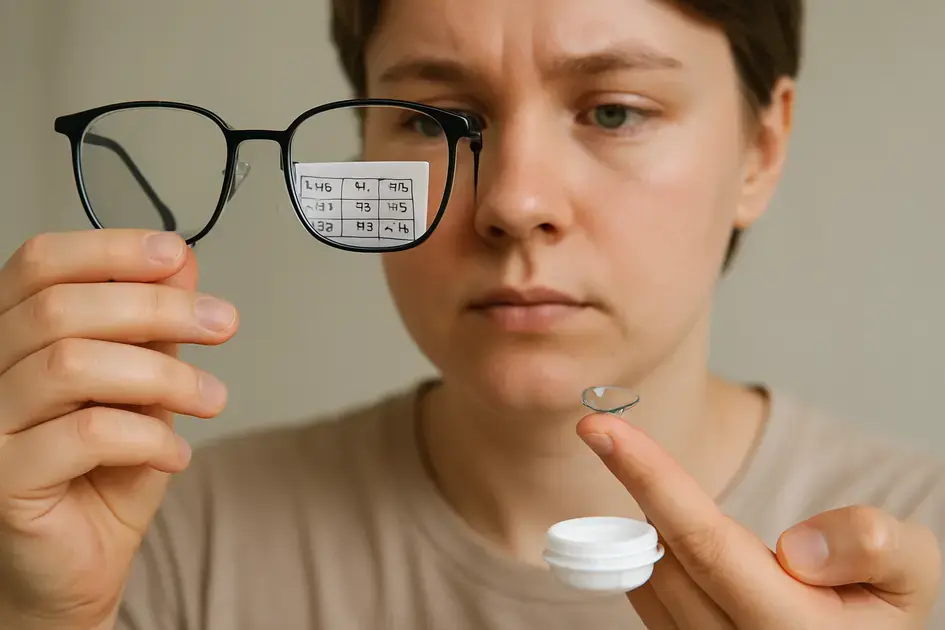
Understanding eye prescription differences between glasses and contacts involves considering vertex distance, lens power, base curve, and diameter. Contacts sit directly on the eye, requiring unique measurements for a comfortable fit, while glasses prescriptions account for the distance from the eye, affecting the necessary correction.
Ever wondered about the difference between your glasses and contacts prescription? Understanding your eye prescription glasses vs contacts can make a big difference when choosing what works best for your vision and daily comfort. Let’s dive into what those numbers really mean and what suits your lifestyle.
How prescriptions differ for glasses and contacts
The primary difference between glasses and contacts prescriptions lies in lens placement. Glasses sit about 12 millimeters away from your eyes, while contacts are directly on the surface. This distance affects the lens power needed to correct your vision, hence the difference in prescription values.
Additionally, contact lens prescriptions include specifications not found in glasses prescriptions, such as base curve and diameter. These measurements are crucial for ensuring the contact lens fits properly on your eye.
Here’s a breakdown:
- Glasses Prescription: Includes sphere (SPH), cylinder (CYL), axis, and sometimes prism and add power.
- Contact Lens Prescription: Includes all of the above, plus base curve (BC) and diameter (DIA).
Because of these variations, you can’t use your glasses prescription to order contact lenses, and vice versa. A separate contact lens exam and fitting are necessary to get a valid contact lens prescription.
Understanding the numbers in your eye prescription

Decoding your eye prescription involves understanding several key numbers and abbreviations. Let’s break it down:
- OD (Oculus Dexter): Refers to your right eye.
- OS (Oculus Sinister): Refers to your left eye.
- SPH (Sphere): Indicates the amount of lens power, measured in diopters (D), needed to correct nearsightedness (myopia) or farsightedness (hyperopia). A minus sign (-) indicates nearsightedness, while a plus sign (+) indicates farsightedness.
- CYL (Cylinder): Indicates the amount of lens power needed to correct astigmatism. If this field is blank, you have no significant astigmatism.
- Axis: Indicates the orientation of the astigmatism correction. It is a number between 1 and 180.
- ADD: Represents the added magnifying power needed to correct presbyopia, common in people over 40. This is typically for bifocal or progressive lenses.
- Prism: Indicates the amount of prismatic power needed to correct double vision (diplopia) or eye alignment issues.
- Base: Specifies the direction of the prism.
For example, a prescription might read: OD -2.00 SPH, OS -1.50 SPH -0.50 CYL Axis 180. This means the right eye needs -2.00 diopters of correction for nearsightedness, and the left eye needs -1.50 diopters of nearsightedness correction with an additional -0.50 diopters to correct astigmatism at an axis of 180 degrees.
Why prescription measurements vary between glasses and contacts
Prescription measurements differ between glasses and contacts primarily because of the vertex distance—the space between your eye and the lens. Glasses sit approximately 12mm away from your eyes, while contacts rest directly on the eye’s surface. This distance necessitates different lens powers to focus light correctly on the retina.
Here’s why this matters:
- Higher prescriptions: The further the lens is from your eye, the more significant the difference in power between glasses and contacts. For high minus (nearsighted) prescriptions, the contact lens power will be less negative than the glasses power. Conversely, for high plus (farsighted) prescriptions, the contact lens power will be less positive.
- Effective power: The effective power changes with distance. Contacts provide a more accurate visual correction because they eliminate the distortions that can occur with higher-powered glasses.
- Astigmatism correction: The axis of astigmatism correction can also vary slightly. Contacts move with your eye, providing a stable correction, whereas glasses have a fixed axis.
In summary, the closer the lens is to the eye, the less power is needed to achieve the same visual acuity. This is why a separate contact lens exam and fitting are crucial, as they determine the precise measurements needed for optimal vision correction with contacts.
The role of pupillary distance in glasses

Pupillary distance (PD) is the measurement of the distance between the centers of your pupils in millimeters. It’s a crucial measurement for glasses because it ensures that the optical center of each lens aligns correctly with your pupils. When the optical center aligns, you experience the clearest and most comfortable vision.
Why is PD important?
- Prevents eye strain: Incorrect PD can cause eye strain, headaches, and blurred vision because your eyes have to work harder to focus through the lenses.
- Optimal vision: Accurate PD ensures that you are looking through the part of the lens designed to provide the best vision correction.
- Comfort: Correctly aligned lenses make your glasses more comfortable to wear for extended periods.
Your PD is typically measured during an eye exam and noted on your prescription. It’s essential to provide this measurement when ordering glasses, especially online, to ensure proper lens alignment. If your PD isn’t on your prescription, you can measure it yourself or have it measured by an optician.
Why contact lens prescriptions include curvature and diameter
Contact lens prescriptions include base curve (BC) and diameter (DIA) because these measurements are essential for ensuring a proper fit. Unlike glasses, which sit on your face, contact lenses rest directly on your cornea. A well-fitted contact lens promotes comfort, clear vision, and eye health.
Here’s a breakdown of each:
- Base Curve (BC): This is the curvature of the back surface of the contact lens, measured in millimeters. It needs to match the curvature of your cornea to ensure the lens sits comfortably and securely on your eye. If the base curve is too steep or too flat, it can cause discomfort, blurred vision, or even damage to your cornea.
- Diameter (DIA): This is the overall width of the contact lens, also measured in millimeters. The diameter ensures that the lens covers the appropriate area of your cornea. An incorrectly sized diameter can lead to lens displacement, discomfort, and inadequate vision correction.
During a contact lens fitting, an eye care professional will measure your cornea and evaluate your tear film to determine the correct base curve and diameter for your eyes. This fitting process is crucial for a successful and comfortable contact lens experience.
Common vision issues and their prescription differences

Different vision issues require distinct prescription corrections, affecting both glasses and contact lenses. Here’s how common issues manifest in prescriptions:
- Nearsightedness (Myopia): Corrected with minus (-) lens power. The higher the number, the stronger the correction needed.
- Farsightedness (Hyperopia): Corrected with plus (+) lens power. Again, the higher the number, the stronger the correction.
- Astigmatism: Corrected with cylinder (CYL) and axis values. The CYL indicates the amount of lens power needed, while the axis specifies the orientation of the astigmatism.
- Presbyopia: Corrected with ADD power, typically in bifocal or progressive lenses for glasses, or multifocal contact lenses. This corrects for the loss of focusing ability due to aging.
Key Differences:
- Severity of Correction: High degrees of myopia or hyperopia may have more pronounced differences between glasses and contact lens prescriptions due to vertex distance.
- Astigmatism Correction: Toric contact lenses are designed to correct astigmatism. The axis and cylinder values are critical for these lenses to align properly on the eye.
- Multifocal Needs: Multifocal contact lenses correct presbyopia by providing different zones of focus within the lens. The ADD power is essential for these corrections.
How your lifestyle impacts choosing glasses or contacts
Your lifestyle plays a significant role in determining whether glasses or contacts are a better fit. Consider these factors:
- Activity Level: If you’re active in sports or outdoor activities, contacts might be more convenient as they stay in place and provide a wider field of vision. Glasses can slip, fog up, or get damaged.
- Environmental Factors: If you work in a dusty or dry environment, contacts might become uncomfortable due to irritation. Glasses can provide a barrier against dust and wind.
- Computer Use: Prolonged screen time can lead to dry eyes. Glasses with blue light filters can reduce eye strain, while contacts might require more frequent use of lubricating drops.
- Fashion and Aesthetics: Some people prefer the look of glasses as a fashion statement, while others prefer the natural look of contacts.
- Convenience and Maintenance: Glasses are easy to put on and take off and require minimal maintenance. Contacts require daily cleaning and care to prevent infections.
Examples:
- A swimmer might prefer daily disposable contacts to avoid losing or damaging glasses.
- An office worker might opt for glasses with blue light filters to reduce eye strain from computer use.
- A frequent traveler might choose glasses for convenience and hygiene, avoiding the need to carry contact lens solutions.
Comfort factors: glasses vs contacts

Comfort is a crucial factor when deciding between glasses and contacts. Each has its own set of comfort-related pros and cons:
- Glasses Comfort:
- Pros: No direct contact with the eye, reducing the risk of infections. Easy to put on and take off.
- Cons: Can be uncomfortable if they slide down the nose or press on the ears. May cause glare or reflections. Limited peripheral vision with some frame styles.
- Contacts Comfort:
- Pros: Natural field of vision. Move with your eyes. Can be more comfortable for active lifestyles.
- Cons: Can cause dry eyes, especially with prolonged wear. Require proper cleaning and handling to avoid infections. Some people find them uncomfortable to insert and remove.
Additional Considerations:
- Material Sensitivity: Some people are sensitive to contact lens materials or cleaning solutions, causing irritation.
- Dry Eye Syndrome: People with dry eye syndrome might find contacts uncomfortable and prefer glasses.
- Proper Fit: A properly fitted pair of glasses or contact lenses is crucial for comfort. Ill-fitting eyewear can lead to headaches, eye strain, and discomfort.
Cost comparison between glasses and contacts
The costs associated with glasses and contacts can vary significantly. Here’s a breakdown of the factors to consider:
- Glasses Costs:
- Initial Investment: Includes the cost of the frame and lenses. Prices can range from budget-friendly to high-end designer options.
- Additional Costs: May include lens coatings (e.g., anti-glare, blue light filter), repairs, and replacement frames.
- Longevity: Glasses typically last one to two years, depending on wear and tear and prescription changes.
- Contacts Costs:
- Initial Investment: Includes the cost of the contact lens exam and fitting.
- Recurring Costs: Includes the cost of the lenses (daily, bi-weekly, or monthly), cleaning solutions, and replacement cases.
- Type of Lenses: Daily disposable lenses are more expensive in the long run than monthly lenses, but they require less maintenance.
Overall Comparison:
- Short-Term: Glasses might seem more expensive upfront, but they often last longer than a supply of contacts.
- Long-Term: Daily disposable contacts can be significantly more expensive over a year than glasses or monthly contacts.
- Insurance: Vision insurance plans often cover part of the cost of glasses and contacts, so it’s important to check your benefits.
Tips for reading your eye prescription correctly

Reading your eye prescription correctly is essential for ordering the right glasses or contacts. Here are some tips to help you understand it:
- Know the Abbreviations:
- OD (Oculus Dexter): Right eye
- OS (Oculus Sinister): Left eye
- SPH (Sphere): Lens power for nearsightedness or farsightedness
- CYL (Cylinder): Lens power for astigmatism
- Axis: Direction of astigmatism correction (1-180 degrees)
- ADD: Additional magnifying power for reading (presbyopia)
- PD (Pupillary Distance): Distance between your pupils
- Understand the Signs: A minus (-) sign before the SPH value indicates nearsightedness, while a plus (+) sign indicates farsightedness.
- Pay Attention to Units: Lens power is measured in diopters (D). Make sure you understand the magnitude and sign.
- Check for Expiration Dates: Eye prescriptions typically expire after one or two years. Make sure your prescription is valid.
- Consult Your Eye Doctor: If you have any questions or uncertainties, don’t hesitate to contact your eye doctor for clarification.
Example Interpretation:
If your prescription reads: OD -2.50 SPH, OS -1.75 SPH -0.50 CYL Axis 90, it means your right eye requires -2.50 diopters for nearsightedness, and your left eye requires -1.75 diopters for nearsightedness with -0.50 diopters of astigmatism correction at a 90-degree axis.
How often prescriptions should be updated for each
Regular eye exams are crucial to ensure your prescription is up-to-date. The frequency of updates varies depending on age, vision needs, and overall eye health:
- Children and Teenagers: Should have eye exams every year. Vision can change rapidly during growth spurts.
- Adults (18-60): Should have eye exams every one to two years, especially if they wear glasses or contacts, have a family history of eye disease, or have a condition like diabetes.
- Seniors (61+): Should have eye exams every year. The risk of eye diseases like glaucoma, cataracts, and macular degeneration increases with age.
Specific Considerations:
- Contact Lens Wearers: Require annual exams to assess the fit and health of their eyes. Contact lens prescriptions typically expire after one year.
- Individuals with Diabetes: Should have annual dilated eye exams to monitor for diabetic retinopathy.
- People with Glaucoma: Need regular check-ups to monitor eye pressure and optic nerve health.
- Significant Vision Changes: If you notice sudden changes in your vision, schedule an eye exam immediately, regardless of when your last exam was.
Remember: Regular eye exams not only ensure clear vision but also help detect and manage eye diseases early, preserving your vision for the long term.
Impact of prescription strength on lens options

The strength of your eye prescription significantly influences the lens options available for both glasses and contacts:
- Glasses Lens Options:
- High-Index Lenses: Recommended for strong prescriptions to reduce lens thickness and weight. These lenses bend light more efficiently, resulting in thinner, more attractive eyewear.
- Aspheric Lenses: Provide a wider field of vision and reduce distortion, especially at the edges of the lens. Ideal for high prescriptions.
- Lens Coatings: Anti-reflective (AR) coatings reduce glare and reflections, improving visual clarity. UV coatings protect your eyes from harmful UV rays.
- Contact Lens Options:
- Material: Silicone hydrogel lenses are recommended for high prescriptions as they allow more oxygen to reach the cornea, reducing dryness and discomfort.
- Design: Toric lenses correct astigmatism, while multifocal lenses correct presbyopia. High prescriptions may require custom-made lenses for optimal vision correction.
- Extended Range: Some contact lens brands offer an extended range of powers to accommodate very high prescriptions.
Considerations:
- Weight and Thickness: Strong prescriptions often result in heavy, thick lenses for glasses. High-index materials can mitigate this.
- Vision Quality: High prescriptions can cause distortions and aberrations. Aspheric lenses and advanced contact lens designs can improve vision quality.
- Comfort: Proper fitting and material selection are crucial for comfort, especially with high prescriptions.
Handling astigmatism in glasses and contacts
Astigmatism, a common vision condition causing blurred vision due to an irregularly shaped cornea, can be effectively managed with both glasses and contacts:
- Glasses for Astigmatism:
- Cylindrical Lenses: Glasses correct astigmatism with cylindrical lenses, which have different powers in different meridians. The prescription includes a cylinder (CYL) value and an axis, indicating the amount and orientation of the astigmatism correction.
- Lens Placement: Proper fitting and alignment of the glasses on your face are crucial for effective astigmatism correction.
- Contacts for Astigmatism:
- Toric Lenses: Contacts correct astigmatism with toric lenses, which have different powers in different orientations. These lenses are designed to stay in a specific orientation on your eye.
- Stabilization Methods: Toric contact lenses use various stabilization methods, such as prism ballast or accelerated stabilization design, to maintain proper alignment.
Comparison:
- Vision Stability: Toric contact lenses generally provide more stable vision than glasses, as they move with your eye.
- Comfort: Some people find toric contacts less comfortable than spherical lenses, especially initially. Proper fitting is essential.
- Lens Options: Both glasses and contacts offer a wide range of materials and designs to correct astigmatism effectively.
Practical advice for first-time contact lens users

Starting with contact lenses can be daunting, but with the right approach, it can be a smooth transition. Here’s some practical advice for first-time users:
- Consult Your Eye Doctor:
- Comprehensive Exam: Get a comprehensive eye exam and contact lens fitting. This ensures the lenses fit properly and are suitable for your vision needs.
- Trial Period: Ask for a trial period with different types of lenses to find the most comfortable and effective option.
- Hygiene is Key:
- Wash Your Hands: Always wash your hands thoroughly with soap and water before handling your contact lenses.
- Cleaning Solution: Use only the cleaning solution recommended by your eye doctor. Avoid using tap water, which can contain harmful microorganisms.
- Lens Case Hygiene: Clean your lens case regularly and replace it every three months.
- Insertion and Removal Techniques:
- Practice: Practice inserting and removing the lenses under the guidance of your eye doctor.
- Proper Technique: Use the correct technique to avoid damaging the lenses or irritating your eyes.
- Wear Schedule:
- Gradual Increase: Start by wearing the lenses for a few hours each day and gradually increase the wearing time as your eyes adjust.
- Follow Instructions: Adhere to your eye doctor’s recommended wearing schedule and replacement frequency.
- Be Aware of Discomfort:
- Listen to Your Eyes: If you experience redness, pain, or blurred vision, remove the lenses immediately and consult your eye doctor.
- Carry Glasses: Always carry your glasses with you in case you need to remove your contacts.
Combining glasses and contacts for different needs
Many people find that combining glasses and contacts meets their diverse vision needs. This approach allows you to enjoy the benefits of both options at different times:
- Situational Use:
- Contacts for Activities: Use contacts during sports, outdoor activities, or social events where glasses might be inconvenient or interfere with your look.
- Glasses for Comfort: Wear glasses at home, in the office, or when your eyes need a break from contacts.
- Dual Correction:
- Contacts for Distance, Glasses for Reading: Some people use contacts to correct distance vision and wear reading glasses for close-up tasks.
- Monovision: A contact lens fitting technique where one eye is corrected for distance and the other for near vision, often combined with glasses for specific tasks.
- Eye Health and Comfort:
- Alternate Wear: Alternating between glasses and contacts can reduce the risk of dry eyes and other contact lens-related issues.
- Backup Vision Correction: Keeping glasses as a backup ensures you have clear vision even if you can’t wear your contacts due to irritation or infection.
Examples:
- A person who wears contacts during the day for work and social events but switches to glasses at home for relaxation and comfort.
- An athlete who wears contacts during competitions but uses glasses for everyday tasks to reduce the risk of eye strain and infections.
Choosing between glasses and contacts depends on your individual vision needs, lifestyle, and comfort preferences. Understanding the nuances of your eye prescription and the factors that influence your decision can lead to a more satisfying and effective vision correction experience.
Consult with your eye care professional to discuss your options and determine the best approach for your specific situation. Regular eye exams and informed choices will help you maintain clear vision and healthy eyes for years to come.
Frequently Asked Questions About Glasses vs. Contacts Prescriptions
Why is my glasses prescription different from my contact lens prescription?
Glasses sit about 12mm away from your eyes, while contacts rest directly on the surface. This distance (vertex distance) affects the lens power needed for clear vision, hence the difference in prescription values.
What do the numbers on my eye prescription mean?
The numbers indicate the lens power needed to correct your vision. OD refers to the right eye, OS to the left eye. SPH indicates the amount of correction for nearsightedness or farsightedness, CYL for astigmatism, and Axis for the orientation of astigmatism.
Why do contact lens prescriptions include base curve and diameter?
Base curve (BC) and diameter (DIA) are essential for ensuring a proper fit of the contact lens on your cornea. They determine comfort, vision clarity, and eye health.
How often should I update my glasses and contact lens prescriptions?
Generally, children and teenagers should have annual eye exams, adults every one to two years, and seniors annually. Contact lens prescriptions typically expire after one year due to the need for fit and health assessments.
Can I use my glasses prescription to order contact lenses?
No, you cannot. A separate contact lens exam and fitting are necessary to get a valid contact lens prescription due to the additional measurements required (BC and DIA).
Are contacts or glasses better for astigmatism?
Both glasses and contacts can effectively correct astigmatism. Toric contact lenses often provide more stable vision, while glasses require proper fitting and alignment.

